
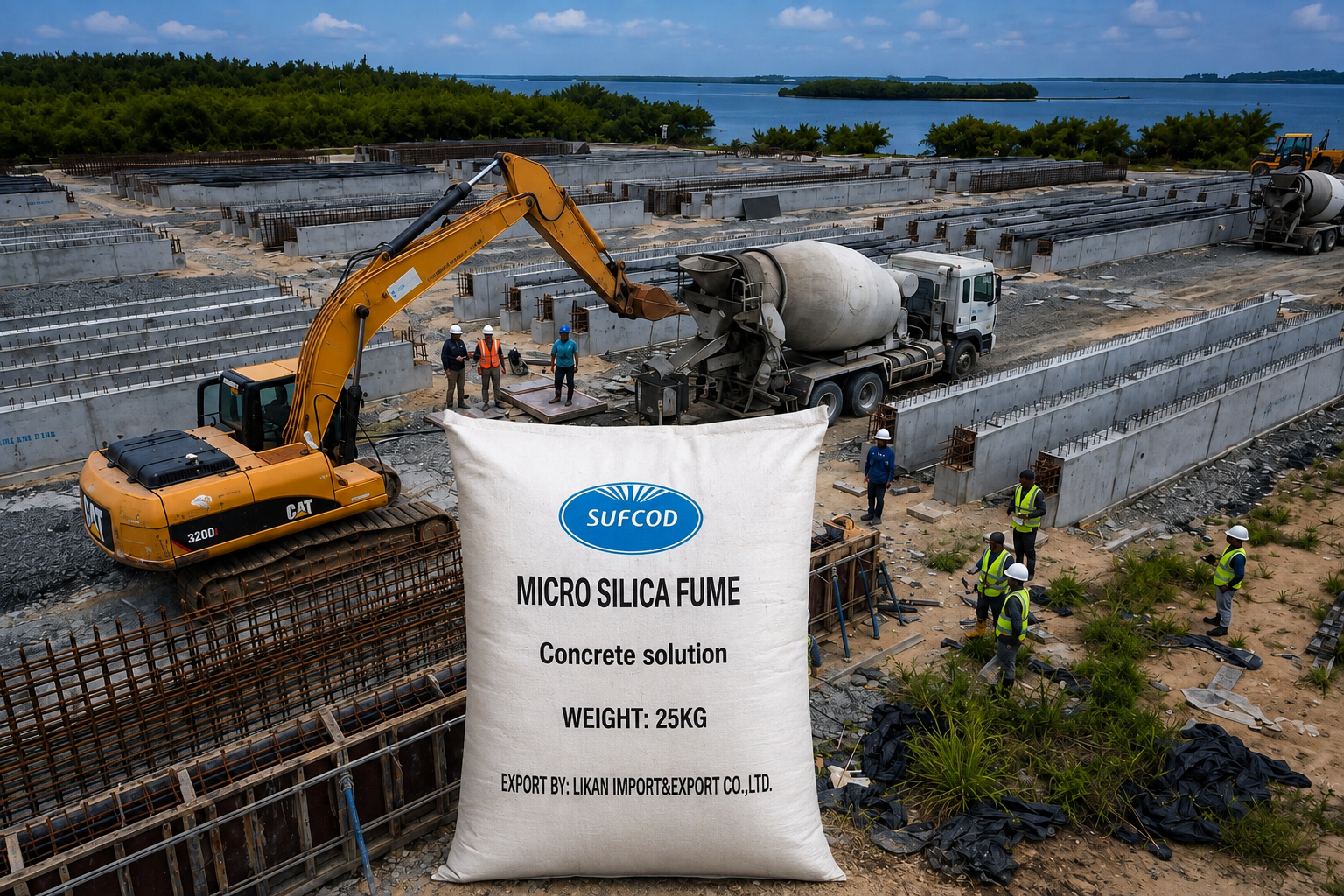
What Is Micro Silica?
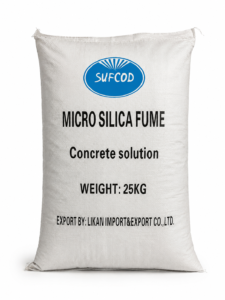
Micro silica, commonly called silica fume, is an extremely fine, non-crystalline form of silica produced as a by-product of the production of silicon and ferrosilicon alloys.
Its particles are significantly smaller than cement particles. Because of this extremely fine particle size and its highly reactive pozzolanic properties, micro silica can modify the structure and performance of concrete.
When incorporated into an appropriately designed concrete mixture, micro silica reacts with components produced during cement hydration and contributes to a denser concrete matrix.
This makes it particularly useful where engineers require high-performance and durable concrete.
How Does Micro Silica Improve Concrete?
The value of micro silica comes from both its physical and chemical effects within a concrete mixture.
1. Improves Concrete Strength
Micro silica can contribute to increased compressive strength by creating a denser cementitious matrix.
Its extremely fine particles help fill spaces within the concrete structure, while its pozzolanic reaction contributes additional cementitious compounds.
For projects requiring high-performance concrete, this can be an important advantage.
2. Reduces Concrete Permeability
One of the major benefits of micro silica is its ability to reduce the permeability of concrete.
Its fine particles help refine the pore structure of the cement paste, making it more difficult for water and certain aggressive substances to penetrate the concrete.
This property is particularly relevant to infrastructure exposed to moisture and potentially corrosive environments.
3. Enhances Durability
Concrete durability is critical for infrastructure expected to perform for many years.
Micro silica is used in high-performance concrete partly because it can improve resistance to chloride penetration and other forms of environmental deterioration. The American Concrete Institute identifies silica fume as a material used to enhance the mechanical and durability properties of concrete.
4. Helps Produce High-Performance Concrete
Micro silica is widely associated with high-performance concrete applications where high strength and/or very low permeability are required.
The U.S. Federal Highway Administration notes that silica fume is used in high-performance concrete and has been used extensively in bridge deck applications.
This makes it relevant to demanding infrastructure applications where concrete performance is a major consideration.
Why Is Micro Silica Used in Bridge Construction?
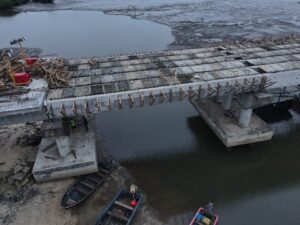
Bridges are exposed to a combination of structural loads and environmental conditions.
Depending on the location and design, bridge concrete may encounter:
- Continuous moisture exposure
- Chloride penetration
- Chemical exposure
- Temperature changes
- Abrasion
- Heavy traffic loads
- Long-term environmental deterioration
For these reasons, bridge construction can require concrete designed not only for strength but also for long-term durability.
Silica fume concrete has been used extensively in bridge decks because its low permeability can help reduce the penetration of chlorides and other harmful substances.
Micro silica is therefore not simply about making concrete “stronger.” Its role can include densifying the concrete structure and improving its resistance to environmental penetration and deterioration.
Other Applications of Micro Silica
Although bridge construction is an important application, micro silica has uses across several areas of construction.
It can be incorporated into appropriately designed mixtures for applications including:
High-performance concrete
Used where enhanced strength and durability are required.
Bridge decks and infrastructure
Used to produce low-permeability concrete for demanding transportation infrastructure.
Marine structures
Silica-fume concrete can be used in structures exposed to aggressive marine environments, where resistance to chloride and water penetration is particularly important.
Tunnels and sprayed concrete
Micro silica can be incorporated into certain sprayed-concrete applications to improve cohesion and reduce permeability.
Structural concrete
It can be used in appropriately designed structural concrete mixtures where higher performance characteristics are required.
Concrete repair and overlays
Silica fume has also been used in concrete overlays and rehabilitation applications, including bridge deck rehabilitation.
Domlo’s Micro Silica Supply for the KAA–ATABA Bridge Project


Domlo Projects & Development Nigeria Limited currently supplies micro silica for the ongoing KAA–ATABA Bridge Project in Rivers State, Nigeria.
The supply forms part of Domlo’s growing industrial materials portfolio and demonstrates the company’s participation in Nigeria’s infrastructure development.
For a major bridge project, materials used in concrete must be selected and proportioned according to the project’s engineering requirements. Micro silica is one of the supplementary materials that can be used to enhance specific concrete performance characteristics when incorporated into a properly designed mixture.
Domlo’s involvement in the project demonstrates its capacity to supply construction-related industrial materials for demanding infrastructure applications.
Supporting Nigeria’s Growing Infrastructure Needs
Nigeria continues to require significant investment in roads, bridges, buildings and other infrastructure.
As construction projects become more demanding, the quality and performance of construction materials become increasingly important.
Domlo is positioning its industrial materials business to support this demand by supplying products such as micro silica for concrete applications.
The company’s involvement in the KAA–ATABA Bridge Project is one example of how Domlo is connecting its material supply capabilities with ongoing infrastructure development in Nigeria.
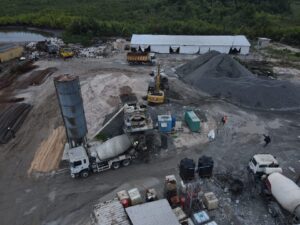
Choosing the Right Micro Silica for Your Project
Micro silica should not be treated as a one-size-fits-all additive.
The appropriate product, dosage and concrete mixture design depend on factors including:
- Required concrete strength
- Desired permeability
- Exposure conditions
- Cementitious materials
- Aggregate characteristics
- Water-to-cementitious-material ratio
- Required workability
- Construction and curing conditions
Because silica fume has an extremely high surface area, its use can increase water demand and affect workability. High-range water-reducing admixtures are commonly required in silica-fume concrete mixtures, and proper curing is important.
For this reason, micro silica should be incorporated based on appropriate concrete mix design and project specifications rather than simply added to concrete without technical evaluation.
Domlo Projects & Development Nigeria Limited
Domlo Projects & Development Nigeria Limited is a Nigerian industrial company involved in plastic packaging manufacturing, industrial materials, utility support services and consumer product distribution.
Its industrial materials portfolio includes micro silica for concrete and construction applications.
The company’s current supply to the KAA–ATABA Bridge Project in Rivers State represents one of its construction-sector engagements and reflects its participation in infrastructure development in Nigeria.
Looking for Micro Silica in Nigeria?
If your construction project requires micro silica for high-performance concrete, bridge construction, structural concrete or other demanding applications, contact Domlo for your material requirements and supply needs.
Domlo Projects & Development Nigeria Limited
Head Office:
18 Akindele Coker Street,
Off Iliasu Road, Egbe, Lagos, Nigeria
Phone: +234 803 465 3753